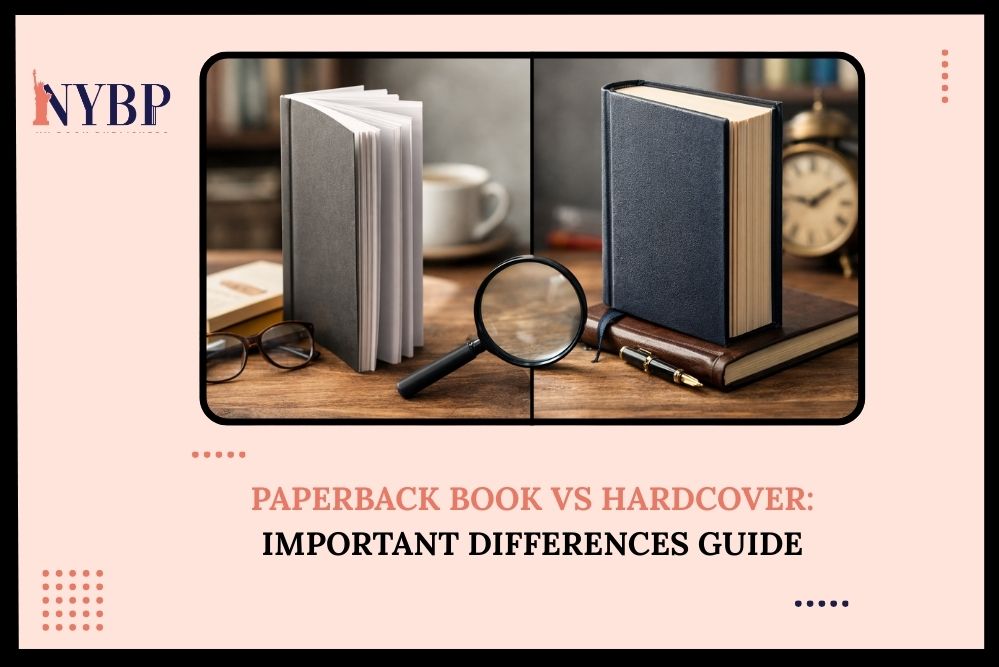
Overview
So, you’ve finished your manuscript and now comes the big question: paperback book vs hardcover? It might seem like a small choice, but trust me, it can change how your readers experience your book, how it sells, and even how long it lasts on their shelves.
Some authors love the sleek, durable feel of a hardcover. Others prefer the lightweight, wallet-friendly paperback that readers can carry anywhere. Choosing the right format isn’t just about looks—it’s about understanding your audience, your goals, and how you want your story to live in the world.
In this guide, we’ll break down hardcover vs paperback in simple, clear terms. By the end, you’ll know which option suits your book, your readers, and your book publishing strategy perfectly.

Understanding Paperback Book vs Hardcover
Before diving into details, it helps to understand the basics.
A paperback book has a soft cover, often made of thick paper or cardstock. It is lightweight, portable, and usually more affordable for readers. Paperbacks are often printed on thinner pages, which makes them easy to carry anywhere.
A hardcover, by contrast, has a rigid, sturdy cover. Many hardcover books also include a dust jacket for extra protection and aesthetic appeal. They are heavier, more formal, and often released first. Hardcovers feel premium and are built to last for years.
Knowing what is paperback vs hardcover helps you see why each appeals to different types of book readers. Some readers love the tactile experience and long-term durability of a hardcover. Others prefer the convenience and affordability of a paperback book.
Physical Differences: Hardcover Book vs Paperback
The physical structure is one of the most noticeable differences between hardcover vs paperback. Understanding these distinctions helps authors make informed choices.
Paperback Book
- Soft, flexible cover that bends easily
- Lightweight and easy to carry
- Affordable price for readers
- Often printed on thinner, lower-cost paper
- Popular for casual reading and mass-market books
Hardcover
- Rigid and durable cover that protects pages
- Heavier and more formal feel
- Higher price point for perceived premium value
- Printed on thicker, high-quality paper
- Ideal for first editions, collectors, and library copies
By comparing hardcover vs paperback, authors can decide which format aligns with their goals. For example, a novel meant for casual reading might perform better as a paperback. A memoir, art book, or business guide might benefit from a hardcover presentation.
Pricing and Market Differences: Paperback vs Hardcover
Pricing is a critical factor in publishing strategy. A hardcover book is typically more expensive than a paperback book. This is because it costs more to produce, uses higher-quality materials, and often launches before the paperback edition.
Many authors release hardcover books first to maximize revenue and appeal to early buyers. Later, they released a paperback edition to reach a wider audience. Paperbacks are perfect for cost-conscious readers or bulk purchases, such as in schools or book clubs.
Durability and Longevity: What Is Hardcover vs Paperback?
Durability is a key difference between formats. A hardcover is built to last. It resists bending, creasing, and damage from repeated handling. Libraries and collectors often prefer hardcover books because they can endure years of use.
Paperback books, while lightweight and portable, are more fragile. They can bend, tear, or lose their shape over time. As an author, consider your target audience. Do they value long-lasting books, or do they prefer something affordable and easy to carry? Understanding the difference between a hardcover book vs paperback ensures your book format matches the reader’s needs.
Reader Experience: Hardcover vs Paperback
How a book feels in the hands affects the reading experience. Hardcover books provide a substantial, premium feel. Readers often perceive them as more serious or valuable. They may feature wider margins, thicker paper, and even decorative covers, making them ideal for gifts or display.
Paperback books are lightweight and portable, making them easier to read for long periods. They are convenient for travel, backpacks, or commuting. Authors should think about their readers’ habits: is their audience likely to read at home, on the go, or give the book as a gift?
Timing of Release: Paperback Book vs Hardcover
Many publishers use strategic timing for book releases. Often, a hardcover comes out first. This creates a sense of exclusivity and allows early adopters to pay a premium price. A paperback book typically follows months later, making it accessible to a broader audience. This strategy can increase overall revenue and extend the life of your book in the market. Knowing this timeline helps authors plan launches and marketing campaigns effectively.
Collectability and Gift Appeal
Hardcover books are often purchased as gifts or collectibles. They feel premium, and readers appreciate the sturdiness and design. Special editions and signed copies are almost always hardcover.
Paperback books are less formal but excellent for casual readers or bulk sales. Authors targeting libraries, book clubs, or budget-conscious readers should consider paperback editions.
Choosing between hardcover vs paperback depends on your goals: collectible value versus affordability and reach.
Printing Costs: Paperback vs Hardcover
Printing costs affect an author’s budget and pricing strategy. Producing a paperback book is cheaper, which is ideal for self-publishing authors or small print runs. Hardcover books cost more because of their thicker covers and high-quality paper.
Authors should balance production cost, retail price, and profit margin when deciding on paperback vs hardcover. Sometimes, offering both versions maximizes both affordability and prestige.
Sales Trends: Hardcover Book vs Paperback
Sales patterns differ between the formats. Hardcover books usually sell at higher prices but in smaller initial quantities. They attract collectors, libraries, and early buyers.
Paperback books may sell in larger numbers over time because they are more affordable and accessible. Understanding what is hardcover vs paperback helps authors forecast sales and plan marketing campaigns effectively.

Advantages of Paperback Books
Paperback books are a popular choice for both readers and authors, especially when the goal is reach and accessibility. They are designed for everyday reading and work well for wide distribution. Here are some of the main advantages of choosing a paperback book:
- Affordable for readers of all budgets, which makes it easier for new readers to try your book without hesitation.
- Lightweight and portable for travel or commuting, so readers can carry it easily in bags or backpacks.
- Quick and cost-effective to print, which helps authors publish faster and manage production costs.
- Ideal for casual reading and book clubs because they are easy to share, discuss, and replace if needed.
- Reaches a wide audience with low price barriers, which increases the chances of higher sales and broader exposure.
Advantages of Hardcover Books
Hardcover books are often seen as premium editions that offer both durability and a strong visual presence. They are a great choice when you want your book to feel more lasting and valuable. Here are the key advantages of choosing a hardcover format:
- Durable and long-lasting, ideal for collectors since the strong cover protects the pages over time.
- Premium feel and presentation, which makes the book look more professional and polished.
- Perfect for gifts or display because hardcover books look impressive on shelves or coffee tables.
- Often the first edition for launches, which helps create excitement and a sense of exclusivity.
- Provides higher perceived value, which can justify a higher price and position your book as a quality product.
Perfect Paperback vs Hardcover: Choosing for Your Book
There is no single “perfect” format that works for every book. The right choice depends on what you are writing, who you are writing for, and what you want your book to achieve. Your genre, your budget, and your long-term publishing goals all play a role in this decision.
If durability and prestige matter most to you, a hardcover is often the better option. Hardcover books last longer, feel more premium, and look great on shelves. They work especially well for books that readers want to keep, collect, or give as gifts.
If portability, affordability, and wide reach matter more, a paperback book is usually the smarter choice. Paperbacks are easier to carry, cost less to produce, and are more attractive to price-conscious readers. This makes them ideal for casual reading, book clubs, and large audiences.
Many authors also use a smart mix of both. They release a hardcover first to create excitement and offer a premium edition, then follow with a paperback to reach more readers. Understanding your audience is key. A fast-paced thriller often does better in paperback, while a memoir, business book, or art book may feel more at home as a hardcover.
A Quick Comparison Of Hardcover vs Paperback
| Feature | Hardcover | Paperback |
| Meaning | A book with a rigid, hard cover designed to protect pages and last longer | A book with a soft, flexible cover made from thick paper or cardstock |
| Examples | Collector editions, library books, first editions, gift books | Novels, travel books, study guides, mass-market books |
| Cover Type | Hard, stiff cover, often with a dust jacket | Soft and bendable cover |
| Durability | Very durable and resistant to wear | Less durable and can bend or tear over time |
| Weight | Heavier and more solid | Lightweight and easy to carry |
| Price | Usually more expensive | Usually more affordable |
| Printing Cost | Higher production cost | Lower production cost |
| Look and Feel | Premium, professional, and high-end | Casual, simple, and practical |
| Portability | Less portable due to weight | Easy to carry for travel or commuting |
| Best For | Gifts, collectors, libraries, long-term storage | Everyday reading, students, book clubs |
| Release Strategy | Often released first | Often released after the hardcover edition |
| Shelf Life | Designed to last for many years | Wears out faster with frequent use |
Hire Visionary Publishers and Get Any Book Genre Written by Us
When you work with visionary publishers like NY Book Publishers, you get more than a service—you get a partner. We help authors create any book genre, from fiction and nonfiction to memoirs and business guides. Our team offers full support, including book writing, book editing, designing, marketing, and publishing. That means you can focus on your story while we handle production and distribution. Whether you want a hardcover book, a paperback book, or both, our team ensures your work reaches the right audience in the perfect format. Your story deserves the ideal presentation.
Ready to Choose Your Book Format!
We hope this guide has helped you understand the real differences between a paperback book vs hardcover and made your decision a little easier. As an author, your choice depends on your goals, your readers, and how you want your book to live in the world. Hardcovers bring durability, prestige, and collector appeal. Paperbacks offer affordability, portability, and wider reach. Both formats can succeed when they match your audience and book publishing plan. Knowing what paperback vs hardcover is helps you choose with confidence. Whether you pick hardcover, paperback, or both, the real goal is simple: give your readers a great experience they will remember.
Frequently Asked Questions
Is it better to buy hardcover or paperback?
This really depends on what you want from the book. If you like something sturdy that looks great on your shelf, a hardcover is a nice choice. If you want something lighter and easier on your budget, a paperback is usually the better option. Both are great, just for different reasons.
Do hardcovers last longer?
Yes, they usually do. Hardcovers are made with strong covers that protect the pages better, so they can handle more use over time. That’s why libraries and collectors often prefer them.
What is a hardcover book?
A hardcover book is a book with a solid, rigid cover. Many also come with a dust jacket. It’s designed to feel more premium and to last longer than a paperback.
Is the paperback book original?
Yes, absolutely. A paperback book is a real and official version of the same book. The story and content are the same as the hardcover. Only the cover and format are different.
Why do people buy hardcover books?
People often buy hardcovers because they feel special. They look great as gifts, last longer, and are nice to keep in a collection. Many readers also like buying the hardcover when it first comes out.