Opening
You open a book, flip to the copyright page, and see a name that is not the publisher you expected. Maybe it says “Knopf” while the publisher is Penguin Random House. That name is an imprint, and understanding the imprint meaning in publishing helps you read the industry the way insiders do. In simple terms, an imprint is a brand name under which a publisher releases books. It is a label, a bit like a record label for music. This guide explains what imprints are, why publishers use them, how they differ from publishers, and how you can create one for your own self-published books. If you are weighing your publishing options, expert Book publishers can help you choose the right path.
What Is the Imprint Meaning in Publishing?
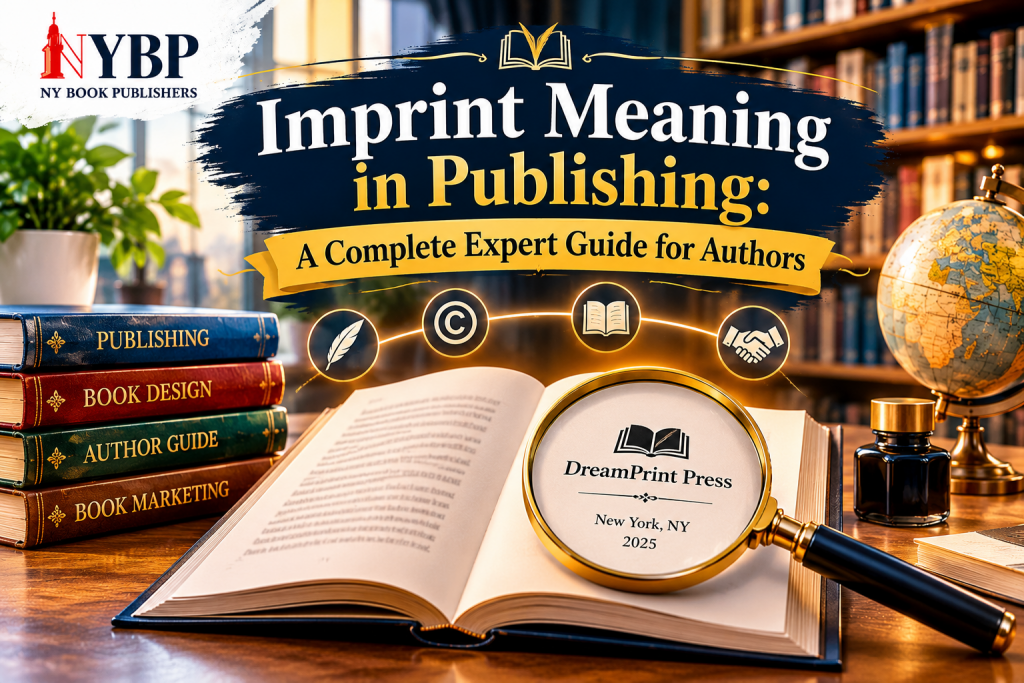
An imprint is a trade name, or brand, that a book publishing company uses to publish a specific group of books. The word comes from the printing trade, where a printer’s mark was literally pressed (“imprinted”) onto a book to show who made it.
Today, the imprint appears on the spine, the title page, and the copyright page. It tells readers and booksellers what kind of book to expect. A single publisher can run dozens of imprints, each with its own style, genre focus, and editorial team.
You may also see the word spelled or confused in other ways. “Imprinted” simply describes something stamped or marked, while “imprint” in publishing refers to the brand. If you searched “imprint or inprint,” the correct spelling is imprint.
What Are Imprints and How Do They Work?
Think of a publisher as a large company and imprints as its specialised departments or brands. Each imprint usually has:
- A clear identity. For example, romance, children’s books, or literary fiction.
- Its own editors. Editors acquire books that fit that imprint’s taste.
- A recognisable logo. Readers learn to trust it.
- Shared resources. book Printing, distribution, and sales are usually handled by the parent publisher.
This setup lets a big company publish very different books without muddling its brand. A thriller reader and a poetry reader may both buy from the same corporation without ever noticing.

Publishing Imprint vs Publisher: What Is the Difference?
This is the question authors ask most often. The short answer: the publisher is the company, and the imprint is a brand within it.
| Feature | Publisher | Imprint |
| What it is | The company that owns and runs the business | A brand or label used by that company |
| Legal status | Usually a registered company | Often a trade name, not a separate company |
| Focus | Can publish across many genres | Usually focused on a genre or audience |
| Example | Penguin Random House | Knopf, Crown, Ballantine |
Some imprints are separate companies. Many are not. In most cases, the parent publisher handles contracts, payments, and distribution, while the imprint shapes which books get chosen and how they look.
Why Do Publishers Use Different Imprints?
Publishers create imprints for practical reasons.
- Genre focus. An imprint signals its niche, such as science fiction or cookbooks.
- Brand trust. Readers who like one book often look for others from the same imprint.
- Editorial vision. A small team can build a clear taste instead of chasing every trend.
- Acquisitions. Companies often buy smaller publishers and keep their names as imprints to preserve their reputation and loyal readers.
- Market reach. Different imprints can target children, adults, academic readers, or faith audiences.
For authors, this matters. Submitting to the right imprint is smarter than submitting to the parent company in general.
What Are Some Examples of Publishing Imprints?
Real examples make the idea clear. Here are well-known imprints and their parent publishers.
| Parent Publisher | Example Imprints |
| Penguin Random House | Knopf, Crown, Viking, Ballantine |
| HarperCollins | Avon, Ecco, William Morrow |
| Simon & Schuster | Scribner, Atria, Gallery Books |
| Hachette Book Group | Little, Brown; Grand Central Publishing; Orbit |
| Macmillan | Tor, St. Martin’s Press, Farrar, Straus and Giroux |
Imprint line-ups change over time through mergers and restructures, so check each publisher’s website for the current list before you submit. You can see imprints in action by looking at the copyright page of books on your shelf. The name above the publisher address is often the imprint.
What Is a Book Imprint Name?
A book imprint name is the brand name that appears on your book as its publisher. For a large company, that might be a long-established name. For a self-published author, it is a name you choose yourself.
A good imprint name should be:
- Easy to say and spell
- Relevant to your genre or mission
- Professional-sounding
- Not already in use by another publisher or business
Many self-published authors use an imprint name instead of their personal name so their books look more established on retailer listings.
Do Self-Published Authors Need a Publishing Imprint?
No, you are not required to have one. You can publish under your own name. But an imprint can help in several ways:
- It makes your books look professional and consistent.
- It lets you publish several authors or genres under one brand later.
- It keeps your personal name off the publisher field in databases.
- It builds a recognisable brand across titles.
If you plan to publish just one book, your own name works fine. If you plan a series, multiple genres, or a small press, an imprint is worth the small effort.
How to Create a Book Imprint: Step by Step
Here is a simple process for creating a publishing imprint name for self-publishing.
Step 1: Define your focus.
Decide what your imprint stands for, such as children’s books, memoirs, or business titles.
Step 2: Brainstorm names.
Write down ten options. Say them out loud. Choose one that is short and memorable.
Step 3: Check availability.
Search the web, social media, and your national business registry. Also check ISBN agency listings and bookseller databases to avoid duplicates.
Step 4: Check legal rules.
In many countries you can trade under a business name, but registration rules differ. Look up your local requirements, and consider asking a legal adviser if you are unsure.
Step 5: Register your ISBNs under the imprint.
When you buy ISBNs from your national agency, you can list your imprint as the publisher name. Remember that the publisher name attached to an ISBN is tied to that number, so decide carefully before purchasing.
Step 6: Design a simple logo.
Keep it clean and readable at small sizes.
Step 7: Use it consistently.
Place the imprint name on your title page, copyright page, spine, and retailer listings.
If you are unsure how ISBNs work in the US, check the official agency, Bowker, for current details.
Imprint Company vs Publishing Company: Are They the Same?
People searching for “imprint company” are sometimes looking for a business that owns imprints, and sometimes for a company that prints items with a company logo. In publishing, an imprint company usually means a publisher or small press that operates under one or more imprint names. The practical difference for authors is this: a company is a legal and financial entity, while an imprint is how that entity presents its books to the world.
How Imprints Help Authors and Readers
Imprints add value on both sides:
- For readers, an imprint is a quality signal. If you loved a thriller from a particular imprint, you may trust its other thrillers.
- For authors, imprints show where a book belongs in the market. A debut author published by a respected imprint gains credibility. Self-published authors can borrow that logic by building a consistent imprint of their own.
- For booksellers and librarians, imprints help with sorting and ordering, because they signal genre and audience quickly.
Common Mistakes When Choosing a Publishing Imprint
- Picking a name already in use. This can cause confusion and legal trouble.
- Choosing something too long or clever. Simple names are easier to remember.
- Changing the name often. Consistency builds recognition.
- Ignoring the cover. Your imprint logo should look good on your spine and back cover. Strong visuals matter, which is why many authors invest in professional book cover design.
- Assuming an imprint makes a book better. The brand supports quality; it does not replace it.
Key Takeaways
- An imprint is a brand name under which a publisher releases books.
- A publisher is the company. An imprint is a brand within it.
- Large publishers use imprints for genre focus, editorial vision, and brand trust.
- Examples include Knopf, Crown, Scribner, Tor, and Orbit.
- Self-published authors do not need an imprint but can create one to look more professional.
- Check name availability and local legal requirements before you adopt an imprint name.
Ready to Build Your Publishing Brand?
Once you have chosen an imprint name, the next step is to give your publishing brand a professional and recognizable identity. A well-designed book cover helps establish your imprint’s presence while creating a strong first impression on readers. Every element, from your imprint logo and book title to the artwork, colors, and typography, should work together to reflect the book’s theme and your publishing vision. Our team offers professional book cover design services to help bring these elements together. Whether you are publishing your first book or building a growing catalog, we can help you create covers that give your imprint a consistent, polished, and memorable appearance across every publication.
To Sum Up
The imprint meaning in publishing is straightforward once you see the pattern: a publisher is the company, and an imprint is the brand it uses to shape and present a particular list of books. Understanding this helps you target the right imprint when submitting, and it gives self-published authors a simple way to build a professional identity. Whether you publish under a big imprint or create your own, choose a clear name, use it consistently, and let your books do the talking. And when your imprint is ready, professional cover design can help it look as polished as the books on any bookshop shelf.
Frequently Asked Questions
What is an imprint in publishing?
An imprint is a brand name under which a publisher releases a particular group of books. It usually has its own identity, editors, and genre focus, while the parent publisher handles operations.
What does imprint mean in publishing?
It means the trade name or label printed on a book to show which brand published it. The term comes from the printer’s mark that was once pressed onto books.
What is the difference between a publisher and an imprint?
A publisher is the company that owns and runs the business. An imprint is a brand within that company, often focused on a specific genre or audience.
What is a book imprint name?
It is the brand name shown on a book as its publisher. Large companies have established imprint names. Self-published authors can choose their own.
Why do publishers use different imprints?
Imprints let publishers focus on genres, build brand trust, keep acquired companies’ reputations alive, and reach different audiences without blending their identities.
What are some examples of publishing imprints?
Knopf and Crown (Penguin Random House), Avon and Ecco (HarperCollins), Scribner and Atria (Simon & Schuster), Orbit and Grand Central (Hachette), and Tor (Macmillan). Check each publisher’s site for current lists.
Do self-published authors need a publishing imprint?
No. You can publish under your own name. An imprint is optional but can make your books look more professional and help you grow a brand over time.
How do you create a publishing imprint?
Define your focus, choose a unique name, check availability and local legal rules, list the imprint as publisher when you buy your ISBNs, design a simple logo, and use the name consistently across your books.
Sources
- Bowker, US ISBN agency: myidentifiers.com
- International ISBN Agency: isbn-international.org
- Publisher websites (Penguin Random House, HarperCollins, Simon & Schuster, Hachette, Macmillan) for current imprint lists