
Overview
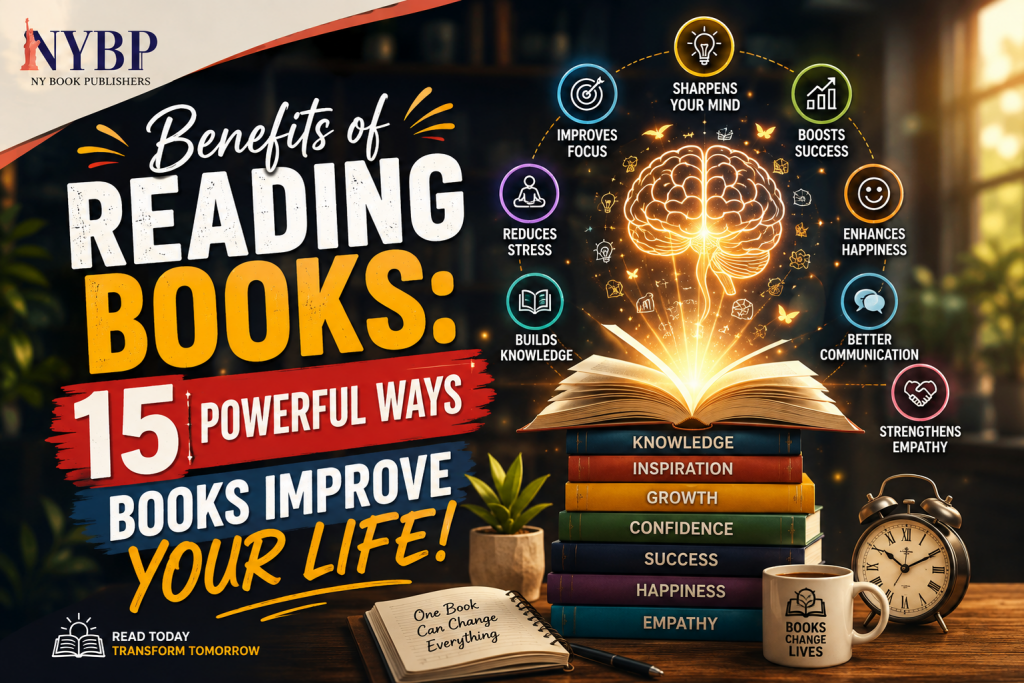
Most people know reading is good for them in the same vague way they know vegetables are good for them. They just cannot always explain exactly why or point to the specific ways it makes a difference in their daily life. The benefits of reading books are far more specific, far more powerful, and far more scientifically supported than most people realize. Research from universities, neuroscientists, and psychologists has spent decades documenting what happens to your brain, your mental health, your relationships, and your professional life when you read regularly.
This guide covers 15 of those benefits in honest, practical detail. Whether you are a lifelong reader looking for reinforcement or someone trying to build a reading habit from scratch, these findings will give you real reasons to pick up a book today. And if reading inspires you to write your own book one day, best book publishing companies and cheap publishing companies make that dream more accessible than ever.
The Benefits of Reading Books: What Science Actually Says
Before we get into the specific benefits, it is worth understanding what the scientific evidence looks like overall. The benefits of reading books scientific research comes from multiple disciplines. Neuroscientists have used brain imaging technology to study what happens in the brain during reading. Psychologists have run controlled studies on reading and emotional intelligence. Epidemiologists have tracked reading habits across large populations over decades and measured outcomes in cognitive health, longevity, and wellbeing.
The benefits of reading books scientific studies consistently show that reading is one of the most cognitively demanding and neurologically beneficial activities a person can engage in regularly. It activates more regions of the brain simultaneously than almost any other leisure activity, and it produces measurable changes in brain structure and function with consistent practice.
Here is what fifteen of those benefits look like in practice.
1. Reading Strengthens Your Brain
Every time you read, your brain is doing serious work. You are processing language, building mental images, tracking characters or arguments, making inferences, and connecting new information to what you already know. This level of cognitive engagement strengthens the neural pathways involved in all of these processes.
One study published in the journal Brain Connectivity found that reading a novel produced lasting changes in neural connectivity in readers, particularly in areas associated with language processing and sensorimotor function. The brain literally rewires itself in response to sustained reading.
The health benefits of reading books for the brain are cumulative. The more consistently you read, the stronger those neural connections become, and the easier sustained concentration and complex thinking become in all areas of your life.
2. Reading Reduces Stress Significantly
This is one of the most well-documented health benefits of reading books. A study conducted at the University of Sussex found that reading reduced participants’ stress levels by 68 percent in just six minutes. That is faster and more effective than listening to music, going for a walk, or drinking a cup of tea, all of which were tested in the same study.
The reason reading works so powerfully for stress reduction is that it requires your full attention and gently redirects your mind away from the thoughts and worries causing the stress in the first place. You cannot simultaneously catastrophize about tomorrow’s meeting and fully follow a compelling narrative. The book wins every time.
The benefits of reading books for mental health extend well beyond immediate stress relief. Regular readers report lower baseline anxiety levels, better emotional regulation, and greater resilience when facing difficult situations.
3. Reading Improves Vocabulary and Language Skills
This one surprises nobody, but the science behind how and why it works is more interesting than most people expect.
Reading exposes you to words in context, which is the most effective way to acquire new vocabulary. When you encounter an unfamiliar word surrounded by sentences that give you information about its meaning, your brain does not just store the definition. It stores the word along with the emotional context, the narrative situation, and the relationships between ideas that surrounded it. This creates much richer and more durable vocabulary acquisition than looking up a word in isolation.
Benefits of reading books for students are particularly significant in this area. Students who read regularly consistently outperform their non-reading peers in vocabulary tests, reading comprehension assessments, and writing quality evaluations. The gap between regular readers and non-readers in vocabulary size becomes measurable as early as third grade and widens significantly through adolescence.
4. Reading Boosts Memory and Recall
Every time you read a book, you are exercising your memory in a sustained and demanding way. You need to remember character names, plot details, timeline events, the arguments made in earlier chapters, and how all of these pieces connect as the book progresses.
This kind of active memory engagement strengthens the hippocampus, the brain region primarily responsible for forming and retrieving memories. Regular reading has been associated with better working memory performance and slower age-related memory decline.
The benefits of reading books regularly for memory are particularly significant as people age. Research published in the journal Neurology found that people who engaged in cognitively stimulating activities including reading throughout their lives showed significantly slower rates of memory decline in older age compared to those who did not.
5. Reading Builds Empathy and Emotional Intelligence
One of the most powerful and perhaps most surprising benefits of reading fiction books specifically is its effect on empathy and emotional intelligence.
When you read fiction, you spend hours inhabiting the inner life of a character whose experiences, background, and perspective may be completely different from your own. You feel what they feel, understand why they make the decisions they make, and see the world through their eyes in a way that no other medium quite replicates.
Research from the New School for Social Research found that reading literary fiction improved participants’ performance on tests measuring empathy and the ability to understand other people’s emotional states. The effect was specific to literary fiction rather than nonfiction or popular genre fiction, likely because literary fiction tends to focus more on complex interior emotional experience.
Authors like Toni Morrison, whose novel Beloved immerses the reader in experiences of grief, trauma, and love that most readers will never personally encounter, have always known intuitively what the research now confirms. Reading fiction makes you better at understanding and connecting with other human beings.
6. Reading Fights Cognitive Decline and Reduces Dementia Risk
This is one of the most significant health benefits of reading books for older adults. Multiple long-term studies have found that regular reading and other cognitively stimulating activities are associated with a reduced risk of developing Alzheimer’s disease and other forms of dementia.
A study published in the journal Proceedings of the National Academy of Sciences followed nearly three thousand elderly participants over five years and found that those who engaged in reading and other mental activities throughout their lives developed dementia at significantly lower rates than those who did not.
The proposed mechanism is what researchers call cognitive reserve. Just as physical exercise builds muscle and cardiovascular capacity that protects against physical illness, mental exercise through reading builds neural reserve that protects the brain against the effects of aging and disease.
7. Reading Improves Focus and Concentration
In a world of notifications, short-form video, and constant digital interruption, the ability to sustain focused attention on a single thing for an extended period of time has become genuinely rare and genuinely valuable.
Reading a book demands exactly this kind of sustained focus. Unlike scrolling social media or watching short videos, reading requires you to hold your attention on one narrative or argument for minutes, hours, or days at a time. Doing this regularly is essentially training your concentration muscles.
The benefits of reading books every day for focus compound over time. People who read daily consistently report better ability to concentrate during work, better retention of information from meetings and conversations, and greater ability to resist distraction in environments that demand sustained attention.
8. Reading Improves Sleep Quality
This is one of the benefits of reading physical books versus ebooks that deserves specific attention, though the general reading benefit applies to both formats.
Reading before bed signals to your brain and body that the day is winding down and sleep is approaching. It provides a transition activity between the stimulation of the day and the restfulness of sleep that many people find difficult to access without it.
The benefits of reading physical books specifically before bed relate to screen exposure. Physical books emit no blue light, which is the type of light from phones, tablets, and computers that interferes with melatonin production and disrupts sleep onset. Reading a physical book in the hour before sleep is associated with faster sleep onset and better sleep quality compared to screen use in the same window.
Even eBook reading with screen brightness reduced and night mode enabled produces better pre-sleep outcomes than social media scrolling or video watching, because the sustained narrative focus of reading is more compatible with the mental state needed for sleep than the rapid context-switching of social media.
9. Reading Builds Knowledge That Compounds
Every book you read adds to a growing base of knowledge that connects to and enriches everything you read afterward. This is the compounding effect of reading, and it is one of the most practically significant benefits of reading books regularly.
The more you know about history, science, psychology, economics, and human nature, the more easily you understand new information in all of these areas. Each new piece of knowledge has more existing knowledge to connect to, which makes it easier to understand, remember, and apply.
Warren Buffett, one of the most successful investors in history, famously spends roughly five to six hours every day reading. When asked about the key to his success, he has repeatedly cited his reading habit as the foundation of the knowledge base that drives his decision-making.
The benefits of reading self-help books and nonfiction specifically operate through this compounding mechanism. A business book, a psychology book, and a history book might seem unrelated, but readers who have read all three find that each one illuminates the others in ways that create understanding none of them could produce alone.
10. Reading Enhances Writing Skills
This is a connection every experienced writer knows intuitively and every writing teacher emphasizes repeatedly. The best way to become a better writer is to read widely and with attention.
Reading exposes you to the full range of ways skilled writers construct sentences, develop arguments, build narrative momentum, and use language to create specific effects in the reader. Over time, these patterns become internalized in a way that improves your own writing without you consciously analyzing them.
Authors from Stephen King to Ursula K. Le Guin have all said versions of the same thing: you cannot write well without reading extensively, and the reading comes first. The benefits of reading books for students who aspire to write are compounded by the fact that reading also builds the vocabulary, the cultural reference points, and the understanding of audience that good writing requires.
11. Reading Reduces Symptoms of Depression
The therapeutic value of reading has been recognized formally enough that the practice of bibliotherapy, using books as part of mental health treatment, is now used in clinical settings in several countries including the United Kingdom, where the National Health Service has incorporated reading programs into mental health care.
The benefits of reading books mental health research shows that both fiction and nonfiction can reduce symptoms of depression through different mechanisms. Fiction provides emotional escape, perspective-taking, and the comfort of feeling understood through characters and stories. Nonfiction, particularly self-help books and psychology books, provides practical frameworks and evidence-based strategies for managing difficult emotions and thought patterns.
The benefits of reading psychology books specifically include exposure to concepts like cognitive behavioral therapy, mindfulness, and positive psychology that have strong empirical support for reducing depression and anxiety when applied consistently.
12. Reading Builds Analytical Thinking Skills
Good books, whether fiction or nonfiction, ask you to think. They present complex characters whose motivations require interpretation. They make arguments that need to be evaluated. They describe situations where multiple explanations are possible and the reader must decide which one the evidence supports.
This analytical engagement, practiced across hundreds of books over years of reading, builds genuine analytical thinking capacity that transfers to professional and personal decision-making contexts.
The benefits of reading books scientific evidence on analytical thinking shows that regular readers demonstrate stronger performance on tests of logical reasoning, critical thinking, and problem-solving than non-readers with comparable educational backgrounds. Reading is not just absorbing information. It is practicing thinking.
13. Reading Expands Perspective and Cultural Understanding
Books take you places you have never been, into lives you have never lived, and into historical periods you never experienced. This exposure to radically different perspectives and experiences expands your sense of what is possible and what is real in ways that direct personal experience alone cannot match.
Reading Things Fall Apart by Chinua Achebe gives a reader from any background an intimate and illuminating encounter with Nigerian Igbo culture and the experience of colonialism from the inside. Reading The Diary of a Young Girl by Anne Frank puts you inside the experience of a Jewish teenager hiding from the Nazis in Amsterdam in a way that no historical summary or documentary can quite replicate.
These encounters with difference build intellectual humility, cultural fluency, and the kind of broad perspective that makes people more effective in diverse workplaces and more thoughtful in their engagement with a complicated world
14. Reading Provides Entertainment That Nourishes Rather Than Depletes
This distinction matters more than it might initially seem. Not all entertainment is equal in terms of what it leaves you with afterward.
After scrolling social media for an hour, most people report feeling worse than when they started. After watching three hours of algorithmically recommended short videos, most people feel stimulated but somehow empty. After reading a great novel or a compelling nonfiction book, most people feel genuinely satisfied, intellectually engaged, and often inspired.
The benefits of reading comic books for adults, fiction, nonfiction, and every other reading format share this quality of leaving the reader with something real: new knowledge, a fresh perspective, a memorable story, or simply the deep satisfaction of having spent time well.
15. Reading Books vs Audiobooks: Both Have Real Benefits
The benefits of reading books versus audiobooks is a question more readers are asking as audiobooks become increasingly popular. The honest answer is that both offer genuine benefits and the best choice depends on your circumstances and goals.
Reading physical or digital text engages the visual processing centers of the brain alongside language comprehension in ways that listening does not. Readers typically process text more slowly than they hear speech, which can facilitate deeper analytical engagement with complex material.
Audiobooks, by contrast, make books accessible during activities where reading is not possible: driving, exercising, cooking, and commuting. They also allow readers to experience the performative aspects of a narrator’s interpretation, which can enhance emotional engagement with certain types of content.
The benefits of reading physical books vs ebooks versus audiobooks are all real. The best reading format is the one that you will actually use consistently. A book that gets listened to on every commute delivers more benefit than a physical book that sits on the nightstand unopened for months.
A Quick Summary of the Benefits
| Benefit | Type of Reading | Scientific Support |
| Stress reduction | Any | Strong |
| Vocabulary growth | Any | Strong |
| Memory improvement | Any | Strong |
| Empathy development | Literary fiction | Strong |
| Dementia risk reduction | Any | Strong |
| Better focus | Any | Moderate to strong |
| Sleep improvement | Physical books especially | Moderate |
| Depression symptom relief | Fiction and self-help | Moderate |
| Analytical thinking | Any | Moderate |
| Writing skill improvement | Any | Strong |
Start Reading and Consider Publishing Your Own Story
Every book you have ever read was written by a person who started with an idea and decided to share it. The benefits of reading books are real and lasting, but so is the benefit of writing one. If reading has inspired you to tell your own story or share your own knowledge, NY Book Publishers offers professional publishing services for authors at every stage of their journey. Whether you are writing your first book or your fifth, having the right team in your corner makes every part of the process more manageable and more rewarding.
Close
The benefits of reading books touch almost every dimension of human health, intelligence, and wellbeing. Better memory. Reduced stress. Greater empathy. Stronger analytical thinking. Lower dementia risk. Improved sleep. These are not soft or speculative benefits. They are measurable, reproducible outcomes that researchers across multiple disciplines have documented consistently. The investment required to access all of these benefits is simply time and a book. Start with something you are genuinely curious about. Fiction, nonfiction, biography, science, history, poetry. The format matters less than the consistency. Even twenty minutes a day, practiced daily, produces results that compound meaningfully over months and years. The benefits of reading books are available to everyone. The only question is whether you are ready to claim them.
Frequently Asked Questions
What are the main benefits of reading books?
The main benefits of reading books include reduced stress, improved memory, stronger vocabulary, greater empathy, better focus, lower risk of cognitive decline and dementia, improved sleep quality, enhanced analytical thinking, and better writing skills. Both fiction and nonfiction provide significant benefits, though certain types of reading, such as literary fiction for empathy and nonfiction for knowledge building, offer specific advantages in particular areas.
What happens when you read books every day?
Reading every day produces cumulative cognitive and emotional benefits that compound over time. Daily readers show measurably better memory retention, larger vocabulary, greater ability to concentrate, lower stress levels, and slower cognitive aging than people who do not read regularly. Even twenty to thirty minutes of daily reading produces measurable benefits within weeks and increasingly significant outcomes over months and years of consistent practice.
How does reading books improve the brain?
Reading activates multiple brain regions simultaneously including those responsible for language processing, visual imagination, emotional response, and analytical reasoning. Sustained reading practice strengthens neural connections in all of these areas, builds cognitive reserve that protects against age-related decline, and has been shown through brain imaging studies to produce lasting changes in neural connectivity even after the reading session ends.
How does reading improve vocabulary?
Reading improves vocabulary by exposing you to unfamiliar words in context, which is the most effective form of vocabulary acquisition available. When you encounter a new word surrounded by meaningful sentences, your brain stores the word along with rich contextual information about its meaning, tone, and appropriate use. This contextual storage produces far more durable and usable vocabulary knowledge than memorizing dictionary definitions in isolation.
Can reading books make you more intelligent?
Research suggests that regular reading improves several components of intelligence including verbal intelligence, analytical reasoning, general knowledge, and emotional intelligence. While reading does not raise IQ scores in a simple direct way, it builds the knowledge base, thinking skills, vocabulary, and cognitive flexibility that intelligence tests and real-world performance both rely on. People who read widely and consistently throughout their lives consistently outperform non-readers on a broad range of cognitive measures.