Overview
You have a story idea buzzing in your head. Or maybe you have research piling up for a nonfiction project. Either way, you’re stuck on one question: how to outline a book that actually works. Here’s the good news—you don’t need a fancy system or a writing degree. You just need a plan that fits the way your mind works. Whether you’re writing independently or planning to use book Publishing Services later, a strong outline is the foundation of every successful book. This guide explores more than 10 proven methods to build a book outline, step by step, with real examples to guide you. By the end, you’ll know exactly how to create an outline for a novel, memoir, business book, or book series.
What Is a Book Outline
A book outline is a map of your story or your argument. It lists your chapters, your key scenes or points, and the order they go in. Think of it as the skeleton. The actual writing puts the muscle and skin on top. Outlining isn’t about killing creativity. It’s about protecting it. When you know where a chapter is headed, you write faster. You also avoid the dreaded middle-of-the-book slump, where so many first drafts die. J.K. Rowling famously used a hand-drawn grid to track plot threads across the Harry Potter series. Each row was a chapter. Each column was a subplot. She filled in the boxes before writing a single scene. That’s outlining doing its job.
How to Outline a Book Before Writing: Start Here
Before you build a full outline, answer three questions.
- What is this book about, in one sentence? This is your logline or thesis.
- Who is it for? A thriller reader wants pace. A business reader wants clarity.
- How does it end? Even a rough idea of your ending keeps your outline pointed in one direction.
Knowing how to outline a book before writing starts with this groundwork. Skip it, and your outline will wander. Nail it, and every chapter you plan will support the bigger picture. Author Gillian Flynn has said in interviews that she knew the twist ending of Gone Girl before she wrote page one. That single decision shaped every outline choice that followed.
How to Write a Book Outline: 10+ Proven Strategies
Now for the main event. Here are more than 10 outlining strategies, each suited to a different kind of writer.
-
The Snowflake Method
Start with one sentence describing your book. Expand it into a paragraph. Then a page. Then a full outline. Author Randy Ingermanson created this method, and it works well if you like building up from something small.
-
The Three-Act Structure
Break your book into setup, confrontation, and resolution. This is the backbone of countless novels, including The Hunger Games by Suzanne Collins. Act one sets up Katniss’s world. Act two is the Games. Act three is the fallout.
-
The Beat Sheet
Borrowed from screenwriting, a beat sheet lists major story beats: the inciting incident, the midpoint, the dark night of the soul, the climax. This works fast because it forces you to hit key emotional turns.
-
Reverse Outlining
Write a messy first draft, then outline it afterward to spot gaps. Some writers think better on the page first and organize second. There’s no wrong order here.
-
The Index Card Method
Write one scene per card. Shuffle them around on a table or corkboard until the order feels right. This is a very tactile way to answer how to write an outline for a book without staring at a blank screen.
-
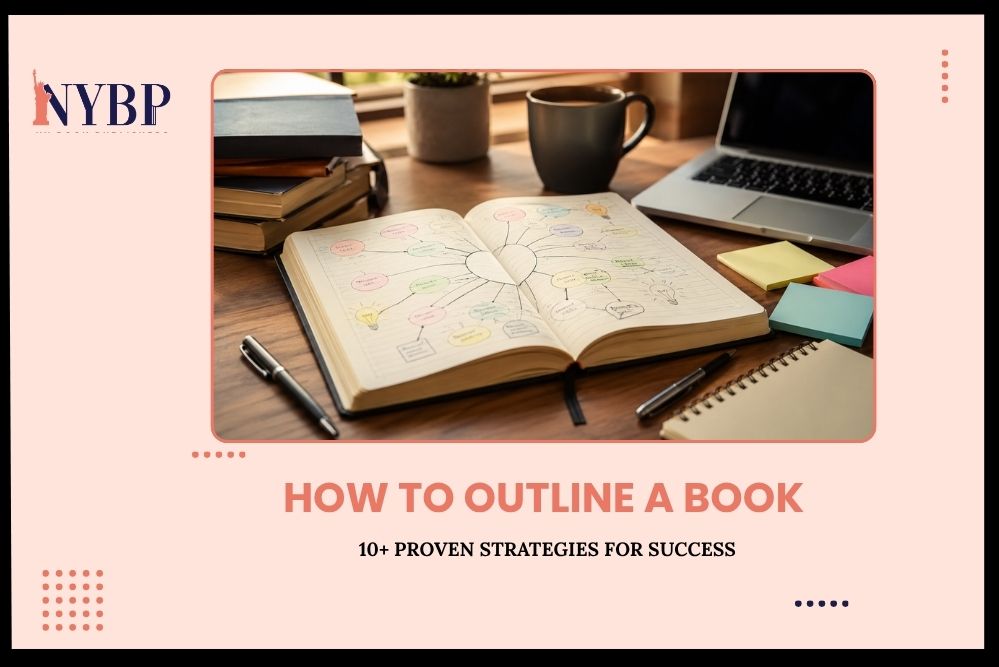
Mind Mapping
Draw a circle with your main idea in the middle. Branch out into chapters, then sub-branches for scenes or points. This suits visual thinkers who freeze up with linear lists.
-
The Chapter-by-Chapter List
A simple numbered list, one line per chapter, summarizing what happens. Straightforward, and easy to update if the plot ‘ve changed.
-
The Synopsis-First Method
Write a two-page synopsis of the whole book first. Then break that synopsis into chapters. This is popular with writers who want to pitch agents before drafting.
-
The Character Arc Outline
Track each major character’s emotional journey chapter by chapter. This matters a lot in character-driven fiction like Where the Crawdads Sing by Delia Owens, where Kya’s growth carries the plot.
-
The Theme-First Outline
Pick your central theme first, then plan chapters that explore it from different angles. Common in memoirs and essay collections.
-
The Hybrid Outline
Mix two or three methods above. Many working authors use a rough three-act structure, then fill it in with index cards for scene order. There’s no rule against combining approaches.
Whichever you pick, the goal is the same: know your next chapter before you sit down to write it.

How to Make an Outline for a Book: Picking Your Format
Once you know your strategy, you need to know how to create an outline for a book in a format you’ll actually use. Some writers love spreadsheets. Others want sticky notes on a wall. Neither is more “correct.” If you’re a spreadsheet person, list chapters down one column and details like setting, POV, and word count across the rest. If you’re a paper-and-pen person, a simple bullet list per chapter works fine.
The point of learning how to create a book outline isn’t to follow a rigid formula. It’s to find a system you’ll return to daily.
How to Outline a Nonfiction Book
Fiction and nonfiction outlines look different. When you’re figuring out how to outline a nonfiction book, structure comes from your argument, not your plot.
Start with your central thesis. Then list the main points that support it. Each point usually becomes a chapter. Under each chapter, jot down the evidence, stories, or data you’ll use.
James Clear’s Atomic Habits follows this pattern closely. Each chapter tackles one habit-building principle, backed by research and short stories. The outline behind that book likely started as a simple list of habit principles, expanded with examples.
For memoir or narrative nonfiction, borrow from fiction outlining too. You still need scenes, tension, and a clear arc, even if every word is true.
How to Outline a Story for a Book: Fiction-Specific Tips
If you’re writing a novel, knowing how to outline a story for a book means paying attention to conflict. Every scene should either raise a question or answer one.
Try this simple exercise. For each chapter in your outline, write down:
- What the character wants in this scene
- What’s stopping them
- What changes by the end of the scene
This forces momentum into your outline before you write a single line of dialogue. It also stops you from writing outline for a book that reads like a flat summary with no tension.
How to Write a Book Outline Template You Can Reuse
A reusable template saves you from starting from scratch every time. Here’s a simple one you can adapt:
Chapter number and title
- Goal of the chapter (what should the reader feel or learn)
- Key scene or point
- Conflict or challenge
- How it connects to the next chapter
This basic structure works whether you’re planning a thriller, a self-help book, or a short story collection. Save it once, and you’ll have a book outline template ready for your next project too.
How to Write a Book Chapter Outline
Zooming into individual chapters matters just as much as planning the whole book. When you sit down to figure out how to write a book chapter outline, treat each chapter like a mini story with its own beginning, middle, and end.
Ask yourself what the chapter needs to accomplish. Does it introduce a new character? Reveal a secret? Move the plot forward by a specific beat? Write that goal at the top of your chapter notes before drafting. This small habit keeps chapters from feeling like filler. Readers notice when a chapter exists just to hit a word count.
How to Outline a Book Series
Writing more than one book means planning across a bigger canvas. Learning how to outline a book series starts with mapping the overarching story, then breaking it into individual book-sized chunks.
Suzanne Collins didn’t just outline The Hunger Games. She planned the full arc across three books, tracking Katniss’s transformation from reluctant tribute to rebellion symbol. Each book has its own outline, but they connect to one bigger throughline.
If you’re wondering how to write a book series outline, start with these steps:
- Write a one-paragraph summary of the entire series arc.
- Decide what changes for your main character by the final book.
- Break that arc into separate book-length outlines.
- Leave threads open at the end of each book, except the last.
This keeps readers hooked across multiple releases, which matters if you’re planning a trilogy or longer.
How to Outline a Book Idea Before It’s Fully Formed
Sometimes you only have a spark. Maybe it’s one character, one scene, or one question you want to answer. Knowing how to outline a book idea at this early stage means resisting the urge to skip ahead.
Write down everything you know, even if it’s messy. Then ask what’s missing. Who is this really about? What do they want? What’s stopping them? Answering these turns a vague idea into a workable outline for writing a book. Don’t worry about perfection here. Early outlines are meant to change.
Using an Epigraph in Your Outline Planning
An epigraph is a short quote placed at the start of a book or chapter, often hinting at the theme ahead. Many outlines include a placeholder for one, even before the writer knows the exact quote they’ll use. Cormac McCarthy opened No Country for Old Men with a passage that set the tone for the entire book. If you plan to use an epigraph, note it in your outline stage. It can guide your themes as you write, not just decorate the finished book.
How to Write a Book Outline for a Publisher
If you’re pitching to an agent or publisher, your outline needs a different level of polish. Knowing how to write a book outline for a publisher means writing with a reader other than yourself in mind.
Publishers usually want:
- A short synopsis of the full book
- A chapter-by-chapter breakdown, one or two sentences each
- A clear sense of your target audience and comparable titles
Keep it tight. Editors read dozens of these a week. A clean, well-organized book outline signals that you know your story inside and out.
How to Write a Book Report Outline (For Students)
Not every outline is for a novel you’re writing yourself. Students often need to know how to write a book report outline for a book they’ve read.
A solid book report outline usually includes:
- Title, author, and genre
- A short summary of the plot or main argument
- Key themes or messages
- Your own opinion or analysis
- A closing statement on the book’s value
This structure keeps a book report organized and easy to grade, and it teaches the same outlining skills you’d use for your own writing one day.
How to Do an Outline for a Book: Mistakes to Avoid
Even with a solid method, it’s easy to trip up. Here’s what to watch for when you’re learning how to do an outline for a book.
- Making it too detailed: An outline that’s as long as the book itself defeats the purpose. Keep chapter notes short.
- Making it too vague: On the flip side, “stuff happens here” isn’t a plan. Give each chapter at least one concrete goal.
- Ignoring your outline once you start writing: Outlines should flex as you learn more about your story, but check back often so you don’t drift too far off course.
- Skipping revision of the outline itself: Your first outline draft is rarely your best one. Revise it the same way you’d revise a chapter.
Contact NYBP and Forget the Stress
Outlining is just the first step. Writing, editing, designing, publishing, and marketing a book is a lot to handle alone, and you don’t have to do it that way. At NY Book Publishers, we handle every part of the journey under one roof. Our team writes, edits, publishes, designs, and markets your book from the first outline to the final sale. Reach out to NYBP, hand us the hard parts, and focus on the story only you can tell.
Final Thoughts
Learning how to outline a book isn’t about following one rigid rulebook. It’s about finding a process that keeps you writing instead of staring at a blank page. Try a method from this list, adjust it to fit your story, and give yourself permission to change it as you go. A good outline doesn’t box you in. It gives you the confidence to finish what you started.
FAQs
How do you outline a book for beginners?
Start simple. Write one sentence describing your book, then list your chapters in order, with one line about what happens in each. Build detail as you go instead of trying to plan everything at once.
What is the best way to outline a book?
There’s no single best way. Fiction writers often do well with a three-act structure or index cards. Nonfiction writers usually work better from a thesis-first outline. Try one method and adjust it to fit how you think.
Do I need an outline before writing a book?
You don’t need one, but it helps most writers finish faster and avoid getting stuck halfway through. Even a loose outline gives you a direction to write toward.
What should be included in a book outline?
A basic outline needs your chapter list, the main goal of each chapter, key scenes or points, and how each chapter connects to the next one. Nonfiction outlines also need supporting evidence or stories for each point.
How long does it take to outline a book?
It varies widely, from a single afternoon to several weeks, depending on how detailed you want to get and how complex your story is. A short outline can take a few hours. A detailed, chapter-by-chapter breakdown for a long novel might take two or three weeks of steady work.