Intro
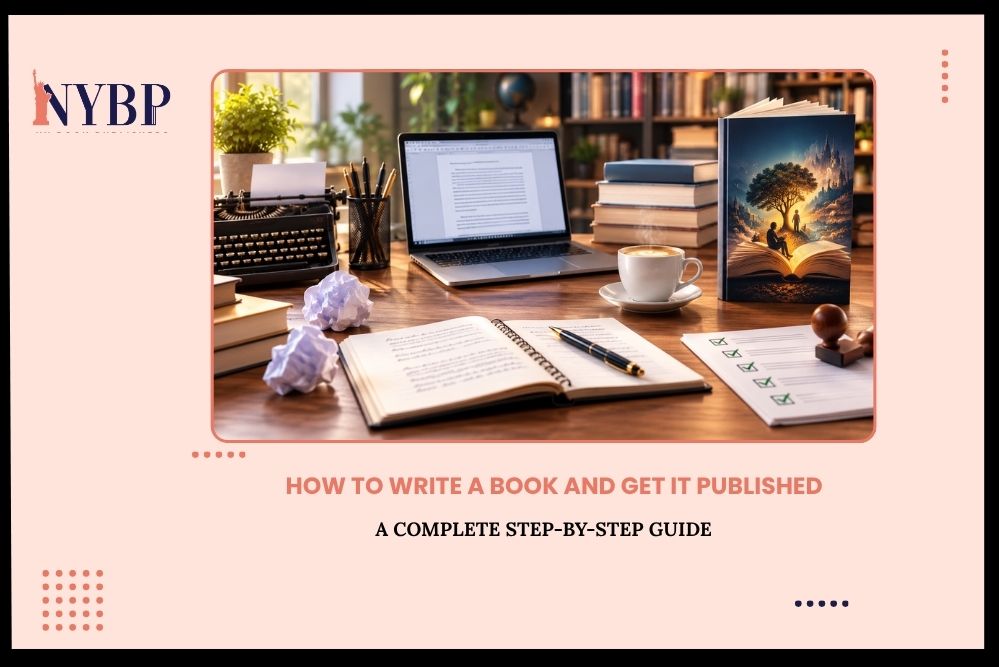
Every published book started as a single idea in someone’s head. Yours can too, but knowing how to write a book and get it published is where most aspiring authors get stuck. The process feels big, complicated, and full of questions that nobody seems to answer clearly. This guide changes that. Whether you plan to work with Self Book Publishers, pursue traditional publishing, or publish independently, these steps will walk you through everything from your first draft to the day your book reaches real readers. No fluff, no vague advice—just a clear, practical, and honest path from idea to becoming a published author.
How to Write a Book and Get It Published: Start With a Solid Plan
Before you write a single word, you need a plan. The authors who finish their books are almost always the ones who started with a clear direction. The authors who abandon their manuscripts halfway through are usually the ones who started without one.
1. Know Exactly What You Are Writing
Ask yourself three things before anything else. What is my book about? Who is it for? What do I want the reader to walk away with? These three answers become your compass for the entire project. Every decision you make from here, about structure, tone, length, and style, flows from them. A business book written for first-time entrepreneurs needs a completely different approach than a thriller written for fans of Gillian Flynn. Knowing your book and your reader before you start saves you enormous amounts of time and energy during the writing process itself.
2. Write an Outline for a Book
An outline is not a cage. It is a map. It keeps you from wandering mid-draft and never finding your way back. Some writers resist outlining because they feel it kills spontaneity, but the truth is that most writers who skip it either abandon their books or spend years rewriting a structurally broken draft. A simple outline for most books looks like this:
| Section | What It Does |
| Opening | Hooks the reader, sets the tone and world |
| Early Middle | Develops characters, establishes stakes |
| Middle | Deepens the conflict or argument |
| Turning Point | Changes everything for the character or reader |
| Late Middle | Consequences of the turning point play out |
| Resolution | Wraps up the core conflict or argument |
| Closing | Leaves the reader with a lasting takeaway |
For nonfiction, map out your chapters by topic and decide what each one needs to teach or argue. For fiction, map out your major plot points and know roughly where your story is going even if the details fill in as you write. Do not overthink it. Even a rough one-page outline helps infinitely more than no outline at all.
3. Getting Your First Draft Done
The first draft is the hardest part for most people. Not because writing is hard, but because perfectionism, self-doubt, and the sheer size of the project get in the way before the words even start. Here is the most important thing to understand about first drafts. They are not supposed to be good. They are supposed to exist. Every published author you admire wrote a messy, imperfect, often embarrassing first draft before they wrote the version that readers loved. Give yourself the same permission. You can fix bad writing. You cannot fix a blank page.
- Set a daily word count and protect it: Even 300 words a day adds up to over 100,000 words in a year, which is a full-length novel. Consistency beats intensity every time. Writing for 30 minutes every day produces more finished books than writing for 8 hours once a month.
- Write to the end before you edit: Stopping to polish chapter one while chapter ten is still unwritten is how books stay unfinished for years. Finish the draft. Then go back and fix it.
- Remove distractions during your writing time: Phone away, notifications off, browser closed. Writers who protect their writing time produce significantly more work than those who write in scattered bursts between interruptions.
- How long does it take to write a book: For most writers, a first draft takes three to twelve months depending on length, book genre, and how consistently they write. A short nonfiction book or children’s title can come together in a matter of weeks. A full-length literary novel might take a year or more. The honest answer is that it takes as long as it takes, and the writers who finish are simply the ones who keep showing up.
Special Book Types: Children’s, Poetry, and Recipe Books
Not every book follows the same path. Here is what you need to know if your project falls into one of these specific categories.
How to Write a Children’s Book and Get It Published
Writing for children is harder than it looks. Every word has to earn its place. The story needs to work on two levels simultaneously, for the child experiencing it and for the adult reading it aloud. Weak children’s books talk down to their readers. Great ones treat children as the intelligent, emotionally perceptive people they actually are.
Keep your text simple and rhythmic for younger readers. Picture books for ages three to six typically run between 500 and 800 words. Early reader books for ages six to eight sit between 1,000 and 5,000 words. Middle grade books for ages eight to twelve land between 20,000 and 55,000 words.
For traditional publishing, most children’s book publishers want your manuscript submitted without illustrations unless you are also a professional illustrator. Publishers pair authors with illustrators themselves, and submitting your own amateur illustrations can actually hurt your chances. If you self-publish, you will need to budget for professional illustration, which is one of the most significant upfront costs in children’s book production.
Publishers like Scholastic, Candlewick Press, Penguin Young Readers, and HarperCollins Children’s Books all have active submission windows and publish a wide range of children’s titles. Research each one carefully before submitting since they all have different focus areas and submission requirements.
How to Write a Kids Book and Get It Published
If you are writing specifically for the six to ten age range, focus on a relatable main character dealing with a problem your reader genuinely recognizes. Friendship, fear, fairness, belonging, and navigating a confusing adult world are themes that never go out of style in this category because they never stop being relevant to the children living through them.
The voice matters enormously in this age range. It should feel energetic, honest, and close to the reader, never preachy or distant. Read widely in the category you are writing for before you start, so you understand intuitively what works and what readers in this age group respond to.
How to Write a Poetry Book and Get It Published
A poetry collection needs more than a gathering of great individual poems. It needs a coherent arc, a sense of journey from the first poem to the last that gives the reader a complete experience rather than a series of isolated moments.
Think carefully about what connects your poems thematically, tonally, or emotionally. Arrange them in an order that builds, shifts, and resolves in some way. The collection should feel curated and intentional, not assembled.
For traditional publishing, poetry collections are typically submitted to independent literary presses rather than major commercial publishers. Graywolf Press, Copper Canyon Press, and BOA Editions are among the most respected poetry publishers in the US. Many poets also find genuine success self-publishing, especially when they already have an established readership through live readings, social media, or publications in literary journals.
How to Write a Recipe Book and Get It Published
Recipe books are a unique blend of practical instruction and personal voice. Your recipes need to work flawlessly because readers will actually cook from them and they will not forgive a recipe that fails. But the writing around those recipes, the headnotes, the personal stories, the context and culture behind each dish, is what makes one cookbook memorable and another entirely forgettable.
Test every recipe multiple times before you finalize your manuscript. Better yet, have other people test them in their own kitchens without your guidance. If something can go wrong without you there to correct it, it will.
For traditional publishing, food publishers typically look for a strong author platform before they invest in an unknown cookbook author. A popular food blog, a significant social media following, or a regular television presence all help your case considerably. Self-publishing a recipe book is increasingly common and can be very profitable if your niche is specific, your photography is strong, and your marketing is consistent.
How to Write a Book Title in an Essay or Formal Writing
This comes up more than you might expect, especially for students and academics writing about books they are studying. When referencing a book title in a formal essay or academic paper, the standard rules are consistent across most style guides.
In MLA and APA formats, book titles are italicized. In older or handwritten formats where italics are not possible, they are underlined. Book titles are never placed in quotation marks unless you are referring to a short story, a poem, or an essay title within a larger collection.
Correct example: To Kill a Mockingbird by Harper Lee explores themes of justice and racial inequality in the American South.
Incorrect example: “To Kill a Mockingbird” by Harper Lee explores themes of justice.
Getting this right matters in academic and professional contexts where attention to detail signals how seriously you take your writing.
How to Get a Book Published: Your Three Main Options
Once your manuscript is polished and ready, you have three main publishing paths available to you. Each one suits different goals, timelines, budgets, and levels of creative control. Understanding the real differences between them helps you make the right choice for your specific book and career.
4. Traditional Publishing
You write your manuscript, craft a query letter, and submit to literary agents. If an agent agrees to represent you, they pitch your book to publishers. If a publisher makes an offer, you sign a contract, receive an advance against future royalties, and wait for your book to go through the publisher’s full production process. The trade-offs are significant. You give up some creative control over your cover, title, and sometimes content. You wait much longer, typically one to two years from deal to publication. The querying and submission process can take months or years on its own before you ever get a deal. What you gain is also significant. Professional editing, cover design, interior formatting, printing, and distribution are all handled by the publisher. Your book appears in major bookstores. You have the credibility and marketing resources of an established imprint behind you.
Write a strong query letter that summarizes your book in one compelling paragraph, explains your target audience clearly, and includes a brief author bio that establishes your credibility or platform. Research agents who represent your specific genre and submit according to each agent’s individual guidelines, which vary significantly and must be followed exactly.
5. Self-Publishing
You handle or hire out every part of the process yourself. Platforms like Amazon KDP, IngramSpark, and Draft2Digital let you publish directly without any gatekeeper making decisions about what deserves to exist. You keep full creative control over every element of your book. You earn significantly higher royalties per sale, often sixty to seventy percent compared to the ten to fifteen percent a traditionally published author earns. You publish on your own timeline, which can be as fast as a few months from finished manuscript to published book. The trade-off is that you carry all upfront costs for editing, design, and formatting, and all ongoing marketing responsibility. Your book will not automatically appear in physical bookstores without additional distribution setup through IngramSpark.
It is genuinely possible through self-publishing platforms that charge nothing upfront and take a percentage of sales instead. Amazon KDP is the most accessible option for first-time authors who want to publish with no initial financial investment. It is essentially what self-publishing is. You upload your formatted manuscript and cover to your chosen platform, set your price and distribution preferences, and your book goes live within days.
6. Hybrid Publishing
Hybrid publishing sits between traditional and self-publishing. Hybrid publishers offer professional editorial, design, and distribution services similar to traditional houses, but the author contributes financially to the production costs and retains more rights and higher royalties in return. Quality among hybrid publishers varies enormously. Some offer genuinely excellent services and strong distribution partnerships. Others charge high fees for mediocre results. Research any hybrid publisher thoroughly before signing anything, checking their existing catalog, their distribution reach, and reviews from authors who have worked with them.
Edit, Design, and Prepare Your Book for Publication
A finished draft is not a publishable book. These steps are what turn your draft into something readers will respect and recommend.
7. Professional editing is not optional
This is the step most authors resist because it costs money and requires vulnerability, but it is the single most important investment you make in your book’s success. Even the best writers cannot objectively edit their own work after months of writing it. A developmental editor addresses structure, pacing, and content. A copy editor catches grammar, consistency, and clarity issues throughout. A proofreader does the final sweep before printing.
8. Cover design matters more than most authors want to admit
Readers judge books by their covers, especially online where your cover appears as a small thumbnail competing with thousands of others. A professionally designed cover that follows your genre’s visual conventions signals quality before the reader reads a single word. Cutting corners on cover design is one of the most common and costly mistakes self-published authors make.
9. Interior formatting ensures your book looks professional on the inside
Consistent fonts, proper margins, clean chapter headings, correct spacing, and properly formatted front and back matter all signal to the reader that this book was produced with care. A poorly formatted interior is immediately obvious and makes readers doubt the quality of the content regardless of how good it actually is.
How to Write a Book Review and Why It Helps Your Publishing Journey
Knowing how to write a book review is a genuinely useful skill for any aspiring author. Writing honest, thoughtful reviews of books in your genre builds your credibility in the reading community, sharpens your critical eye for your own writing, and gets your name in front of readers who share your interests.
A strong book review covers the premise of the book, what it does well, what it could do better, and who it is best suited for. It is specific rather than vague, honest rather than flattering, and substantive enough to give the reader a real sense of whether this book is worth their time.
Posting reviews on Goodreads, Amazon, and literary blogs connects you with the reading community you will need when your own book launches. Authors who are visible and engaged readers before their own publication tend to launch into a warmer, more receptive community than those who appear only when they have something to sell.
NY Book Publishers – Your Partner from First Draft to Published Book
Writing a book and getting it published is one of the most meaningful things a person can do. It is also genuinely a lot to manage on your own, especially when you are trying to write your best work at the same time. NY Book Publishers supports authors through every stage of the publishing journey. From manuscript development and professional editing to cover design, interior formatting, and publishing strategy, their team brings the expertise to take your book from a rough idea to a finished, professional product you are genuinely proud of. Whether you are writing your first children’s book, a personal memoir, a business guide, a poetry collection, or a full-length novel, NY Book Publishers has the experience, the resources, and the genuine commitment to help you do it right from the very beginning.
10.Your Book Is Worth Writing!
There has never been a better time to write a book and get it published. The tools, the platforms, and the professional support available to authors today would have seemed extraordinary even twenty years ago. The barriers that once kept great books from reaching readers have largely disappeared. The only thing standing between your idea and a published book is the decision to start and the commitment to see it through.
Understanding how to write a book and get it published is genuinely within reach for any writer who approaches the process with patience, honesty about their own work, and the willingness to ask for help at the stages where professional support makes the biggest difference. Start with your idea. Build your outline. Write your draft without stopping to perfect it. Edit it honestly and thoroughly. Choose the publishing path that matches your goals. And trust that if your story is worth telling, it is worth every bit of effort the process requires. Your book deserves to exist. Now go write it.
Frequently Asked Questions
How do I write a book and get it published?
Start by developing a clear concept and writing a detailed outline. Then write your first draft from beginning to end without stopping to edit. After completing the draft, revise it thoroughly, hire a professional editor, and invest in quality cover design and formatting. Then choose your publishing path: query literary agents for traditional publishing or upload directly to platforms like Amazon KDP for self-publishing. The key is finishing your manuscript before worrying too much about publishing decisions.
Can I get a book published without a literary agent?
Yes, absolutely. Self-publishing requires no agent at all and gives you complete control over every aspect of your book. Some smaller traditional publishers and independent literary presses also accept direct submissions from authors without agent representation. However, the major commercial publishers in the US and UK almost exclusively work through literary agents, so an agent becomes necessary if your goal is a deal with one of the large publishing houses.
Do I need an outline before writing a book?
You do not absolutely need one, but having at least a basic outline significantly increases your chances of actually finishing your manuscript. Many writers who skip the outlining phase find themselves stuck, writing in circles, or facing major structural problems by the middle of their draft. Even a simple chapter by chapter map of your major plot points or topics gives you enough structure to maintain momentum through the difficult middle sections where most unfinished books are abandoned.
Do I need a professional editor before publishing my book?
Yes, strongly and without exception. A professional editor catches problems you simply cannot see in your own work after months of writing it. For traditional publishing, your manuscript needs to be as polished and strong as possible before agents and publishers ever see it. For self-publishing, skipping the editing stage is the single most common reason self-published books receive poor reviews, fail to find readers, and damage the author’s reputation before their career has properly started.
How do publishers decide whether to accept a book?
Publishers evaluate multiple factors when considering a manuscript. The quality of the writing itself comes first, but commercial viability matters equally. They consider how the book fits their current publishing list, what the market looks like for that genre or topic, and how large and engaged the author’s existing audience is. For debut authors specifically, a compelling query letter, a strong and immediately engaging opening chapter, and a clearly defined target audience are the most important elements in getting a publisher’s serious attention.